Freeland, PA
Freeland Loading Dock Repair, With Your Choices Laid Out
Our crews fix, service and install dock levelers, vehicle restraints, overhead doors, high speed doors and rolling grilles at warehouses, distribution centers, plants and retail receiving docks in Freeland, Hazleton and Mountain Top. Before any tool comes out, we tell you which part failed, what caused it and what each repair would mean.
- OSHA 30 certified
- 1-year labor warranty
- Written quotes, line by line
- Photos of what broke
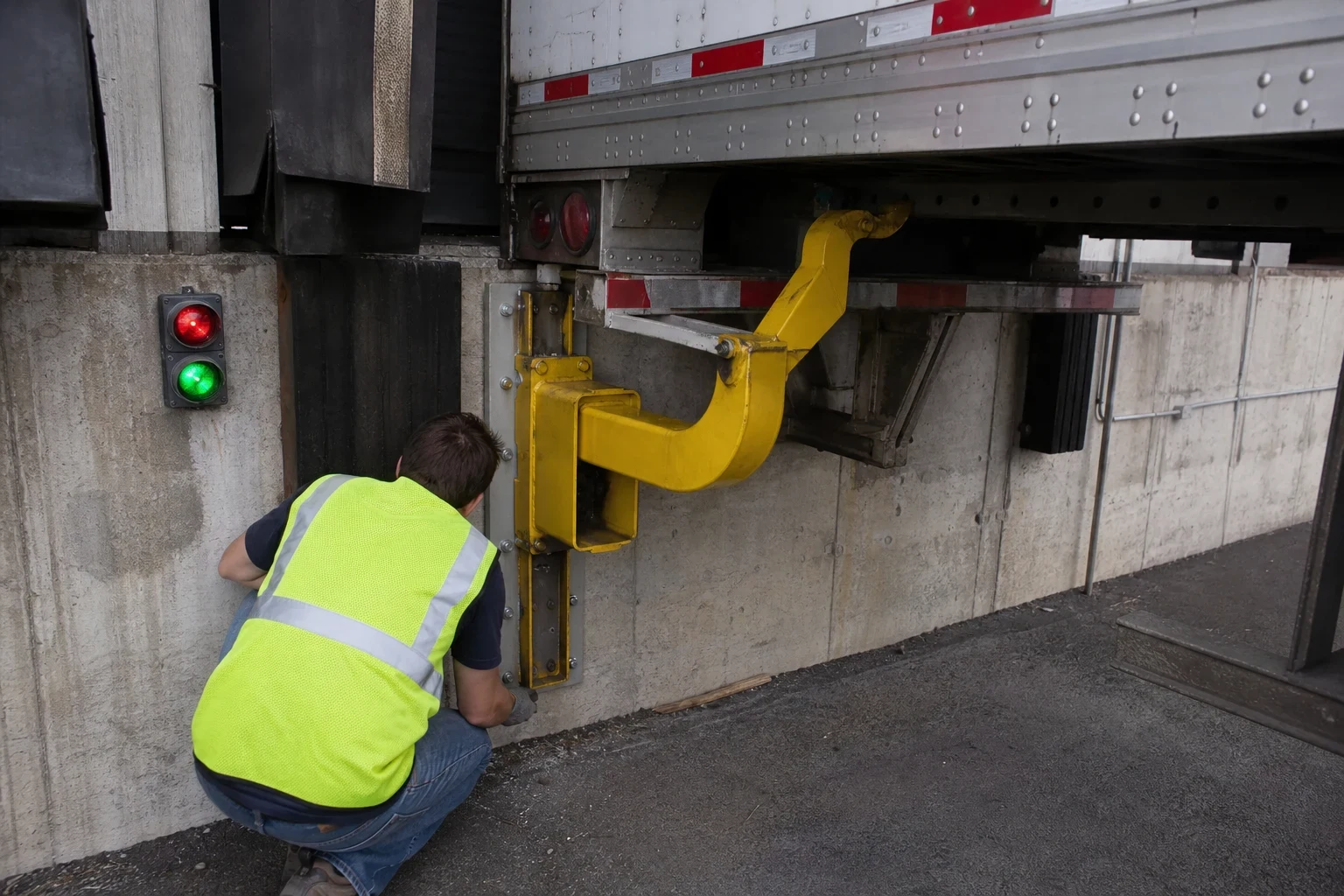
Dock Equipment and Door Services
Our technicians are OSHA 30 certified, and the labor on our repairs and installations carries a 1-year labor warranty. We handle dock leveler repair, vehicle restraints, overhead doors, high speed doors and rolling grilles, plus loading dock preventative maintenance that catches worn parts before they stop a shipment. When equipment is past saving, we cover loading dock equipment sales and installation, and we walk you through the differences between models so you can pick what fits your traffic.
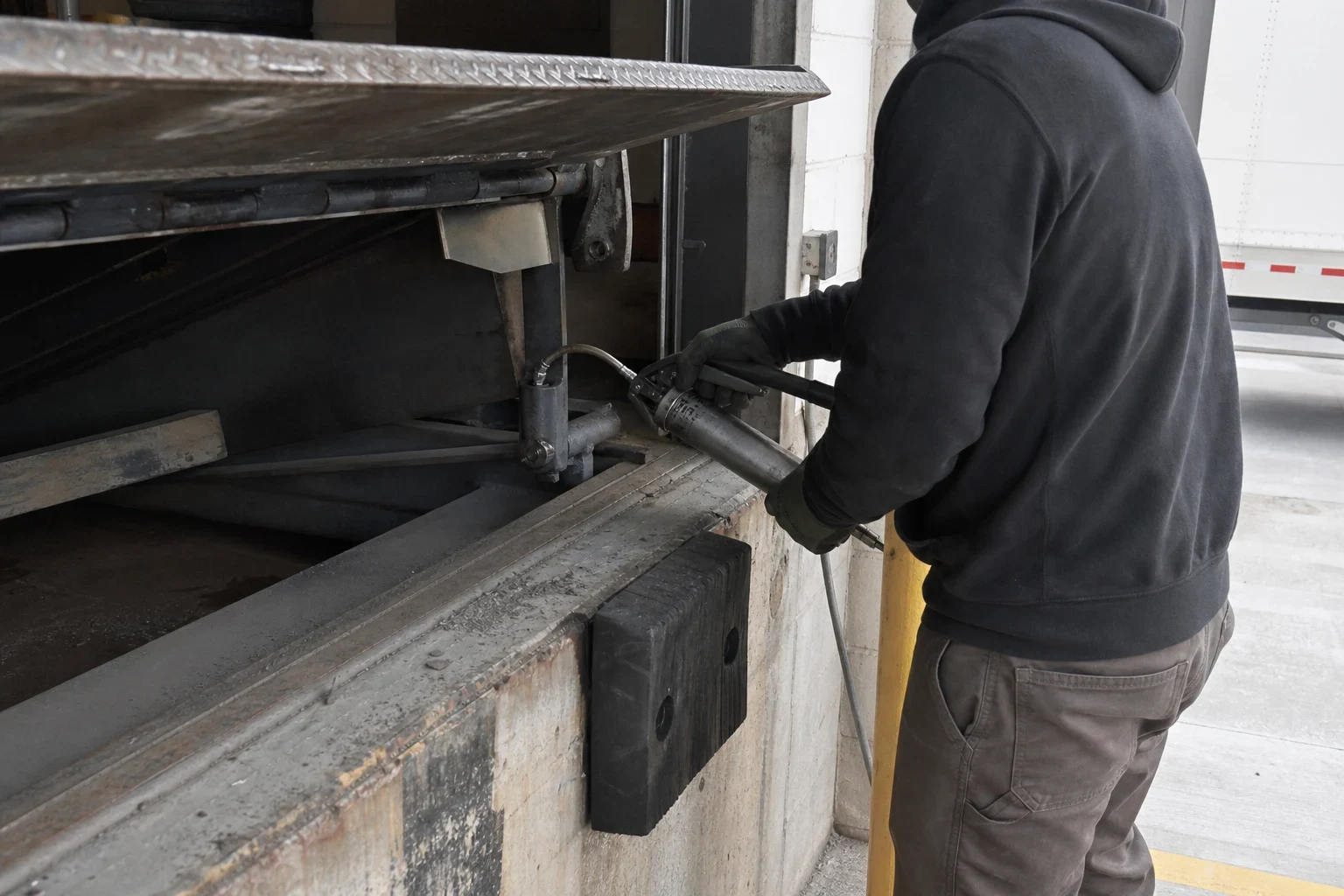
Preventative Maintenance
Scheduled service for dock levelers, overhead doors, restraints and seals, with a written report that tells you what we found and what it means.
Equipment Installation
New dock levelers, vehicle restraints, bumpers, seals and dock lights sized to your pit, your trailers and your daily load count, then set and tested.
Equipment Sales
Dock levelers, vehicle restraints, seals, bumpers and doors chosen from measurements of your dock and trailers, with every option explained in plain terms before you buy.
Overhead Doors
Repair, replacement and adjustment of sectional overhead doors at loading docks, from broken torsion springs to forklift-damaged panels and worn operators.
High Speed Doors
Repair, adjustment and installation of fabric and rigid high speed doors, from curtain re-feeds and breakaway resets to drives, encoders and safety sensors.
Rolling Grilles
Repair, rebalancing and installation of rolling security grilles, from bent rods and tired springs to new curtains and motor operators.
Vehicle Restraints
Repair, adjustment and installation of hook-style and wheel-based vehicle restraints, plus the lights and interlocks that tell your crew a trailer is held.
Dock Levelers
Repair and replacement for hydraulic, mechanical and air-powered dock levelers, from a stuck lip to a sagging deck, with the cause shown to you before any work.
What Sets the Cost of Dock Work
We won't name a price until we have looked at the equipment, since two levelers showing the same symptom can call for very different fixes. The points below decide where a job falls, and knowing them makes any estimate easier to read, including ours.
After inspecting the equipment, we explain what we found and hand you a written, itemized estimate before starting. Nothing gets added afterward unless you approve it.
- Mechanical, hydraulic or air-powered
- A mechanical leveler runs on springs and a pull chain, so its repairs usually involve springs and hold-down parts. A hydraulic unit adds a pump, motor, hoses and cylinders, and a leak may mean new seals, fluid and cleanup. An air-powered leveler lifts on an airbag that wears in its own way.
- State of the pit and concrete
- A new leveler can only be as steady as the pit and curb angle under it. Crumbling concrete or a bent curb angle means concrete and welding work on top of the install, and we point that out early so it doesn't catch you off guard.
- Equipment age and parts supply
- Everyday springs, rollers and seals are simple to get. Old or discontinued models can need a retrofit part or something fabricated, and that adds time.
- Door dimensions and cycle rating
- On an overhead door, its width, height and daily number of openings decide the spring size and grade of parts. A door that runs all day needs high-cycle springs, which cost more at first and last longer.
- Wiring and controls
- Powered levelers, vehicle restraints and high speed doors need wiring, control panels and in some cases interlocks linking them. New or upgraded controls show up as their own line on the estimate.
- Timing and access
- Night or weekend work to keep your dock running means more labor time. A position crowded by trailers or racking takes longer too.
How Each Job Moves From Call to Handoff
One stuck door or a whole row of levelers, nearly every job goes through these four steps.
- 1
You call and tell us what's wrong
Describe what you see: a leveler sinking, a door reversing, a restraint that won't catch. We ask about the make, age and symptoms so the right parts come with us.
- 2
We inspect and point out the cause
At your dock we look at the failed part and everything around it, because a snapped cable can trace back to a worn drum or a frozen bearing. You get photos and a plain explanation of each choice.
- 3
We make the repair with the area secured
We lock and tag out the position, barricade it and work during the window you picked. When we're done, the old parts leave with us and the floor gets swept.
- 4
We test it and show your crew
We run the equipment as your crew would, check the safety stops and restraints, and point out anything your dock staff should keep an eye on, like a leveler lip that extends slowly.
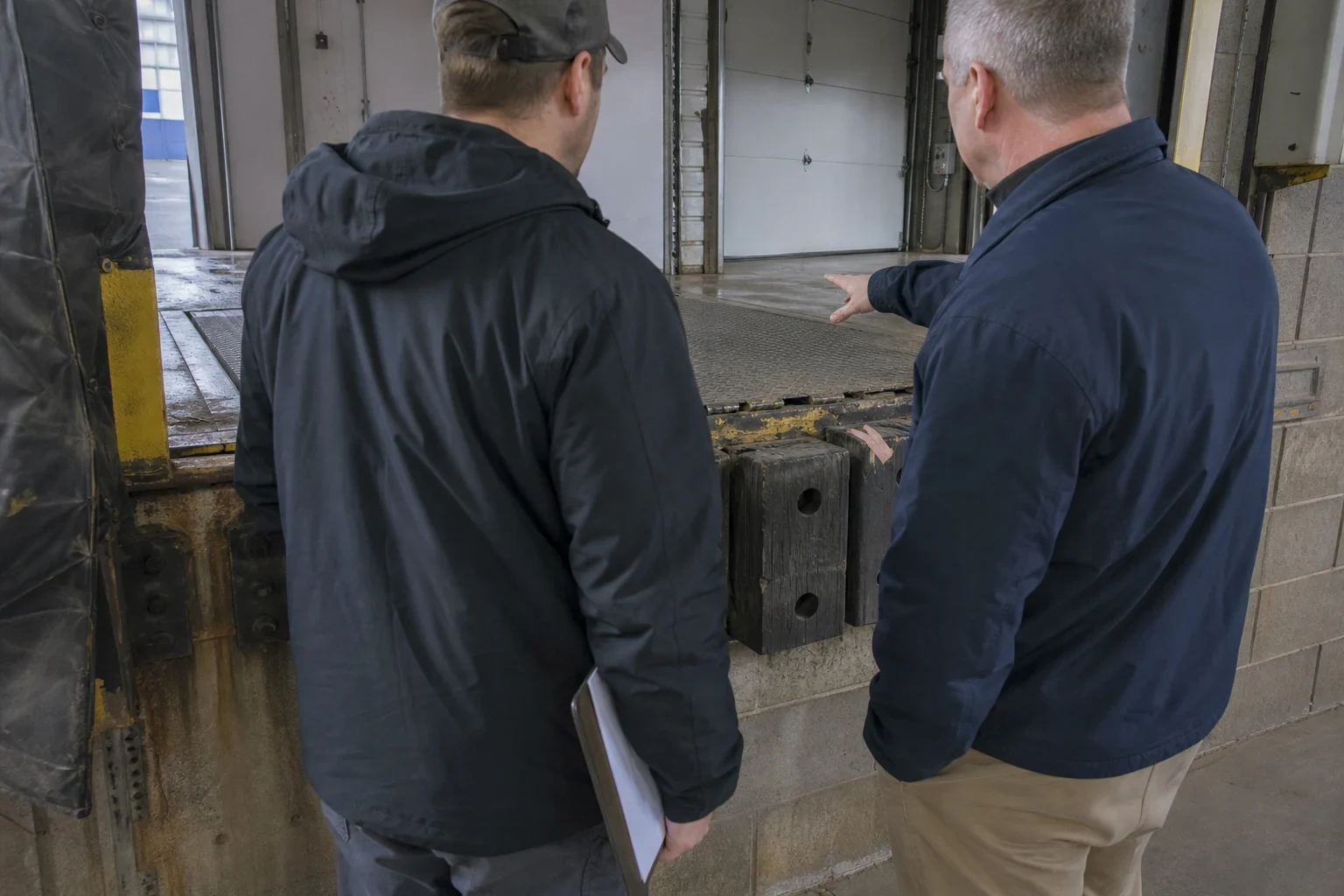
Where We Work Around Freeland
Our technicians travel to docks in Freeland and nearby towns such as Hazleton, West Hazleton, Mountain Top, Weatherly and Hazle, as well as Butler, Foster, Wright, Fairview and Rice. If your warehouse or receiving area is close by, let us know its location when you call.
- Freeland
- Butler
- Foster
- Hazleton
- Mountain Top
- Hazle
- Wright
- West Hazleton
- Fairview
- Rice
- Weatherly
The Service Areas page has more detail on our travel range. Don't see your town? Call and ask.
How We Work at Your Dock
A dock problem usually has a cause you can see once someone points to it. We show you that cause and lay out the choices in words a facility manager can take to the person who signs the check.
- 01
We name the part and the reason
You will not get a vague "leveler needs work." We tell you it is a leaking hydraulic cylinder seal, a cracked lip hinge pin or a worn torsion spring, and what wore it out, whether that is overloaded forklifts, missing hold-downs or simply cycle count.
- 02
Repair or replace, answered honestly
If a modest fix like a new hinge pin keeps a leveler working for years, we say so. If the deck plate is cracked through the welds and the pit is crumbling, we show you why another patch would only buy weeks. Either way, you see photos of what we found.
- 03
Line-item estimates you can follow
Parts, labor and any concrete or electrical work are listed separately. That makes it easy to compare against another bid or split the work across budget periods.
- 04
Work planned around your receiving schedule
We ask when your trucks arrive and which doors you can spare. Where possible we take one position down at a time so the rest of the dock keeps moving, and we barricade the work area so forklift traffic stays clear.
- 05
Safety treated as part of the repair
A leveler without a working velocity fuse or a trailer without a restraint is how people get hurt. We test those safety functions on every job and tell you plainly if anything falls short of current standards.
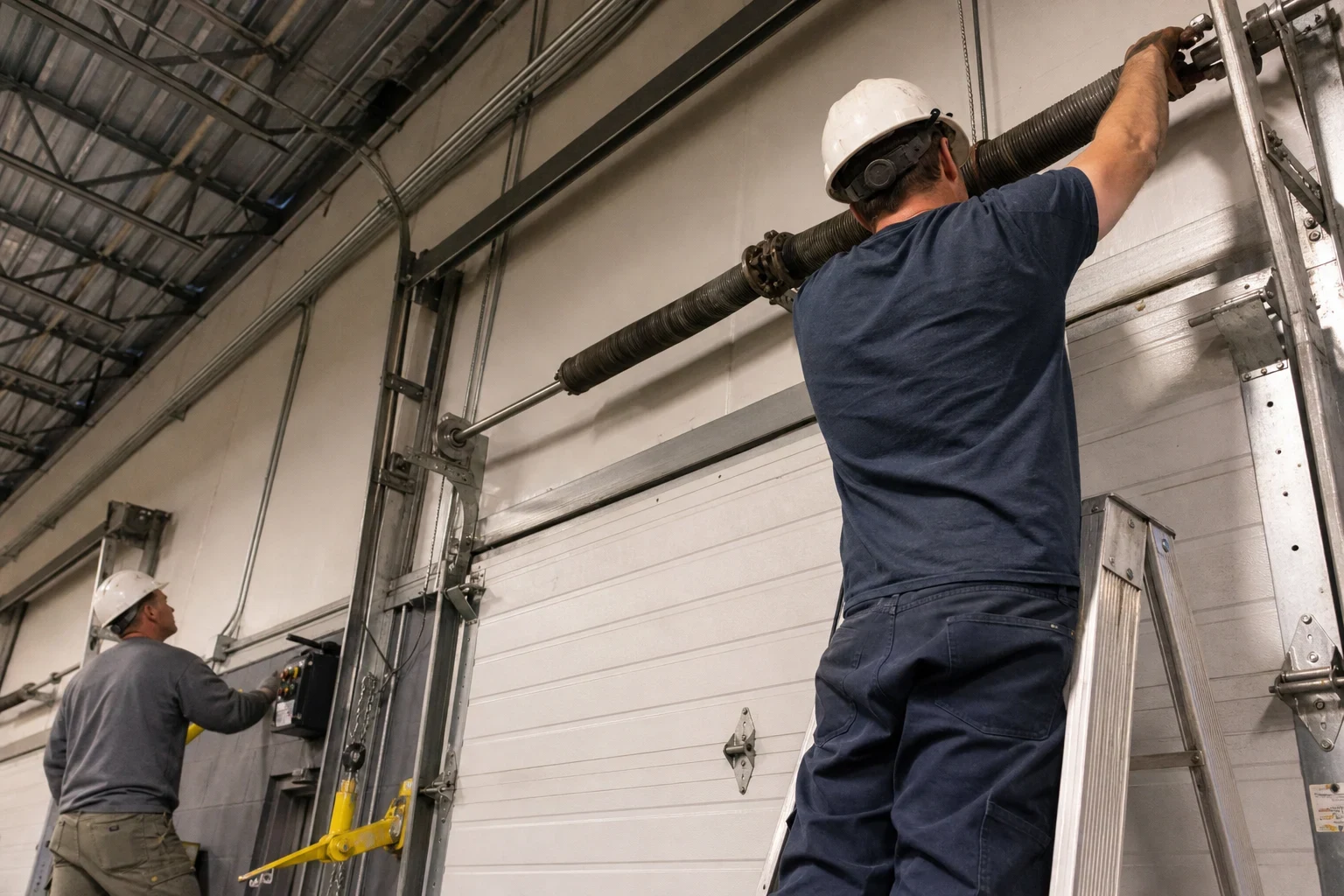
About Loading Dock Repair Freeland
We are a loading dock repair company serving facilities across the Freeland area. Our customers run warehouses, distribution centers, manufacturing plants, grocery stores and logistics operations, and what they all want is a dock that moves freight safely without stopping for breakdowns.
We built our approach around clear answers. Many dock managers inherit equipment they did not buy and are handed estimates full of part numbers. We translate that into what the part does, why it failed and what each option will cost you in money and downtime, so the decision is yours and makes sense.
Winters here are hard on docks. Cold thickens hydraulic fluid and road salt tracked in on trailers eats at steel, so we pay close attention to fluid, seals and corrosion when we inspect.
- Warranty
- 1-year labor warranty
- Certifications
- OSHA 30 certified
What Dock Managers Want to Know
Is it better to repair our dock leveler or buy a new one?
The answer comes from the structure, not the symptom. When the deck, lip and frame are solid, a new cylinder, spring or hinge pin usually gives you more for the money. When the deck plate has cracked, the frame has twisted or the pit is breaking up, fixes tend not to last. We show you photos and tell you which situation you have.
What makes a hydraulic leveler slowly sink?
Most often it is a worn seal in the cylinder or a leaking hose fitting letting pressure escape. A low fluid level or a bad check valve in the power unit has the same effect. Cold weather pushes a borderline seal over the edge, so drifting tends to start in winter.
How frequently does dock equipment need service?
A busy dock usually does well with a visit every three to six months, and a quieter one at least yearly. Preventative maintenance includes greasing, checking springs and cables, inspecting hydraulic fluid and hoses, and testing safety features, so worn parts get replaced when it suits you, not in the middle of a delivery.
How is a vehicle restraint different from wheel chocks?
A restraint hooks the trailer's rear impact guard and keeps it against the dock, so the trailer can't creep or pull away early. Most are wired to lights that tell both the driver and the forklift operator whether the trailer is held. Chocks rely on someone setting them right every time, and they can slide on ice.
Do you stand behind the work once you're gone?
Yes. The labor on our repairs and installations carries a 1-year labor warranty. If something we worked on fails within that year, we come back and fix it again.
Does a repair shut down our entire dock?
In most cases, no. We close one position and leave the doors beside it open for trucks, timing the work around your receiving and shipping appointments. For larger installs we hand you a schedule first showing which doors close and for about how long.
Where does a high speed door make sense?
They suit openings used many times an hour, like the passage between a warehouse and a cooler or production floor. Because they open and shut fast, less heat or cold escapes and forklifts keep moving. At an opening with little traffic, a standard overhead door is normally the more sensible pick.
Get a Plain Answer on Your Dock
Describe how your leveler, door or restraint is acting, and we will explain what probably caused it and what you can do. From there we book an inspection and give you the estimate in writing.